Hi,
there seems to be something off with the new 3.13 version or I did something wrong. I installed the new version (windows system, Python 3.12.4) via pip (pip install -U ovito). Goal was: “maybe faster Anari/VisRTX/NVidia rendering”.
But the result was doubling rendering time / half performance. I do “tetrahedron rendering” on a system with about 4860 translucent tetrahedra on a RTX 3080.
With new ovito-python 3.13:
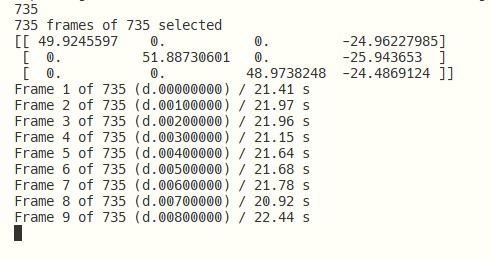
Back to ovito 3.12 (pip install --force-reinstall -v "ovito==3.12.2"):
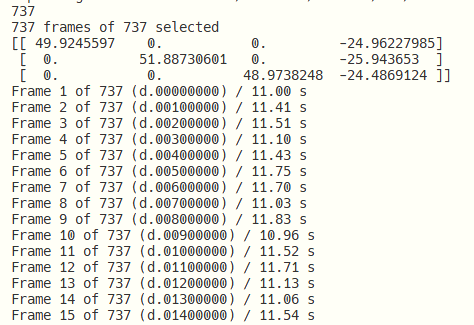
Rendering options were in both cases:
anari = AnariRenderer(
   ambient_light_radiance = 0.95,
   ambient_occlusion_distance = 24,
   ambient_occlusion_samples = 16,
   denoising_enabled = True,
   direct_light_irradiance = .95,
   direct_light_latitude = np.deg2rad(75.0),
   direct_light_longitude = np.deg2rad(-120.0),
   samples_per_pixel = 24,
)
Rendering results looking very similar (left: 3.13, right: 3.12) with the newer version (left) producing “slightly more reflective” tetrahedron faces:
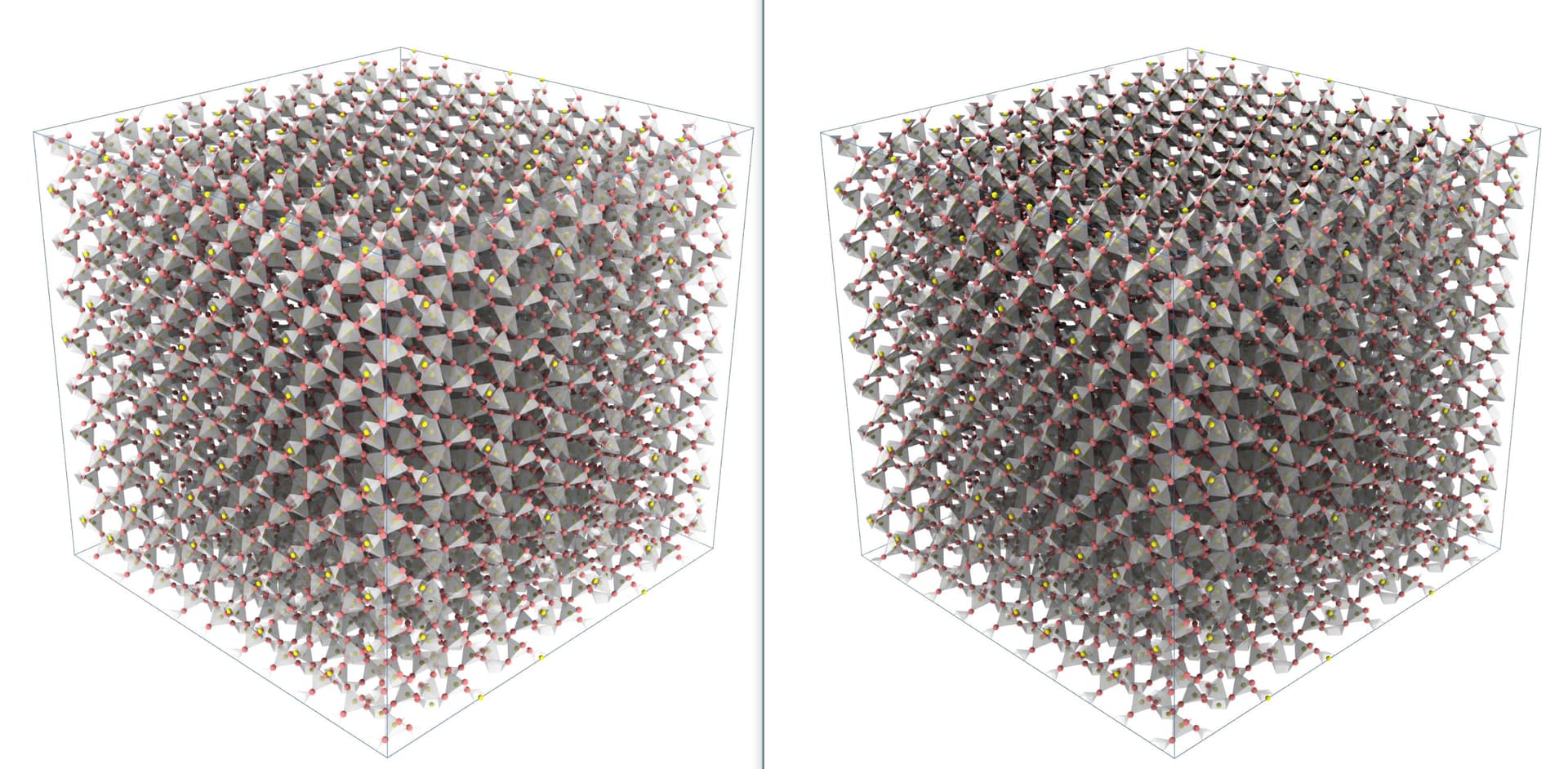
Did something change which one has to consider?
–
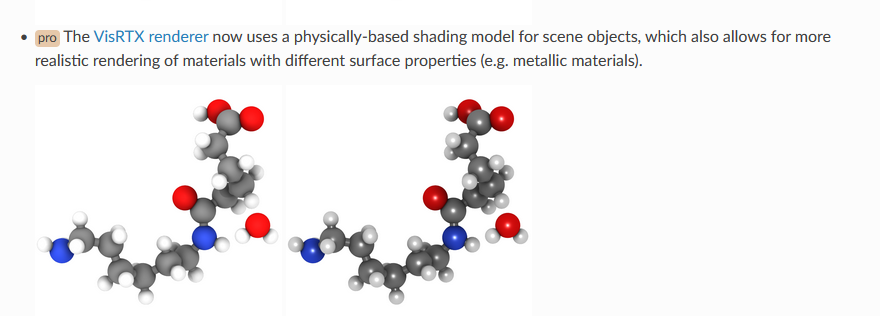
Addendum: maybe it has to do with this significant change:
Thank you for your support!