Hi all,
I am performing ReaxFF MD simulations to study the thermal decomposition of a new energetic material (DAP-4) at 2500 K.
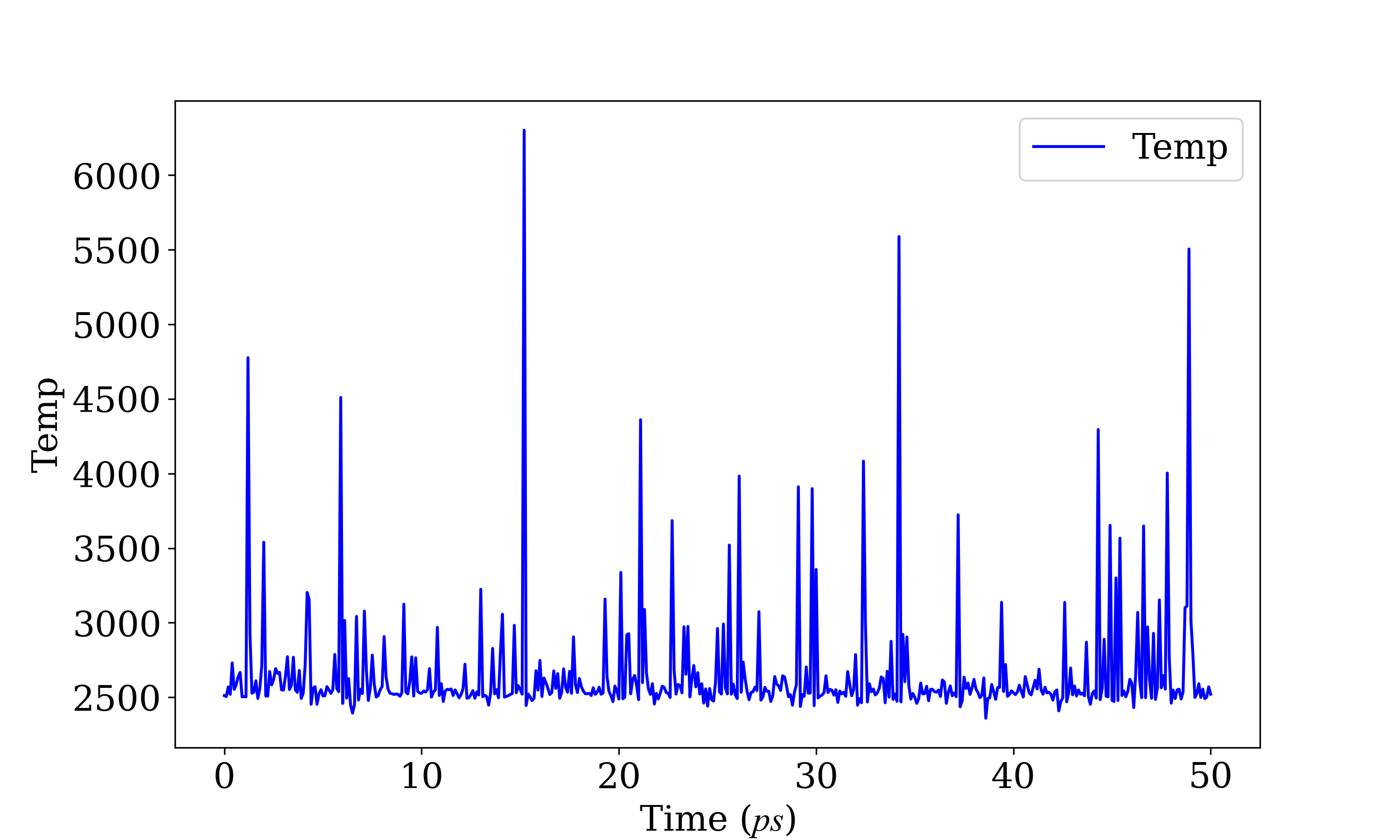
I have observed occasional instantaneous temperature spikes. While I understand that bond breaking in energetic materials releases significant kinetic energy, I am concerned about the reliability of the thermostatting strategy and potential artifacts from fix nve/limit.
LAMMPS: [LAMMPS (27 Jun 2024)]
What I see
1.With Berendsen-type thermostat + fix nve/limit 0.1 (earlier tests), I sometimes get large spikes up to ~5000–6000 K (Fig1) .
2.With the current setup (Langevin + fix nve/limit 0.1), spikes are smaller (about~ 3000-3600K) (Fig2).
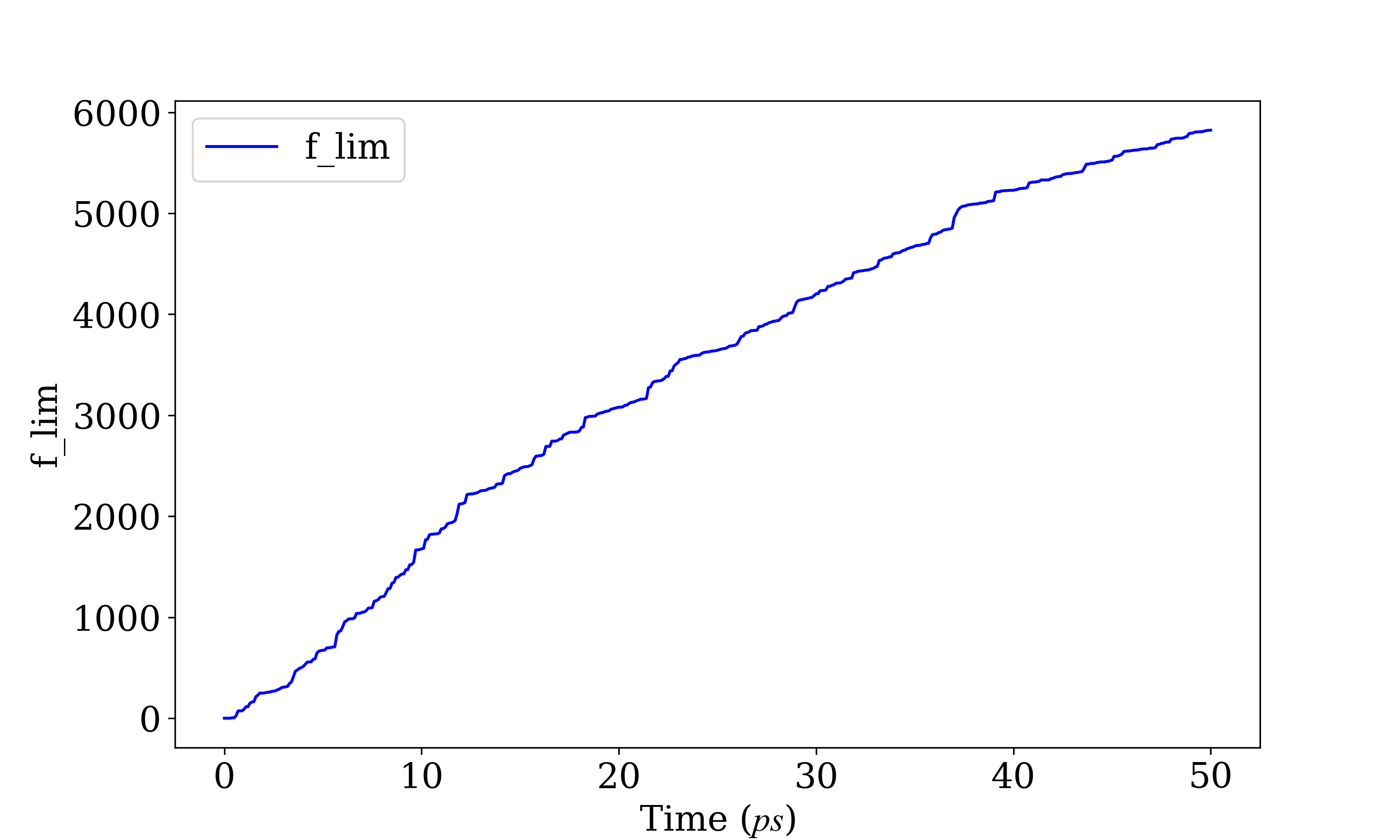
3.In this 50-ps run, fix nve/limit 0.1 is active for ~5000 steps out of 500000 (~1%) (Fig3).
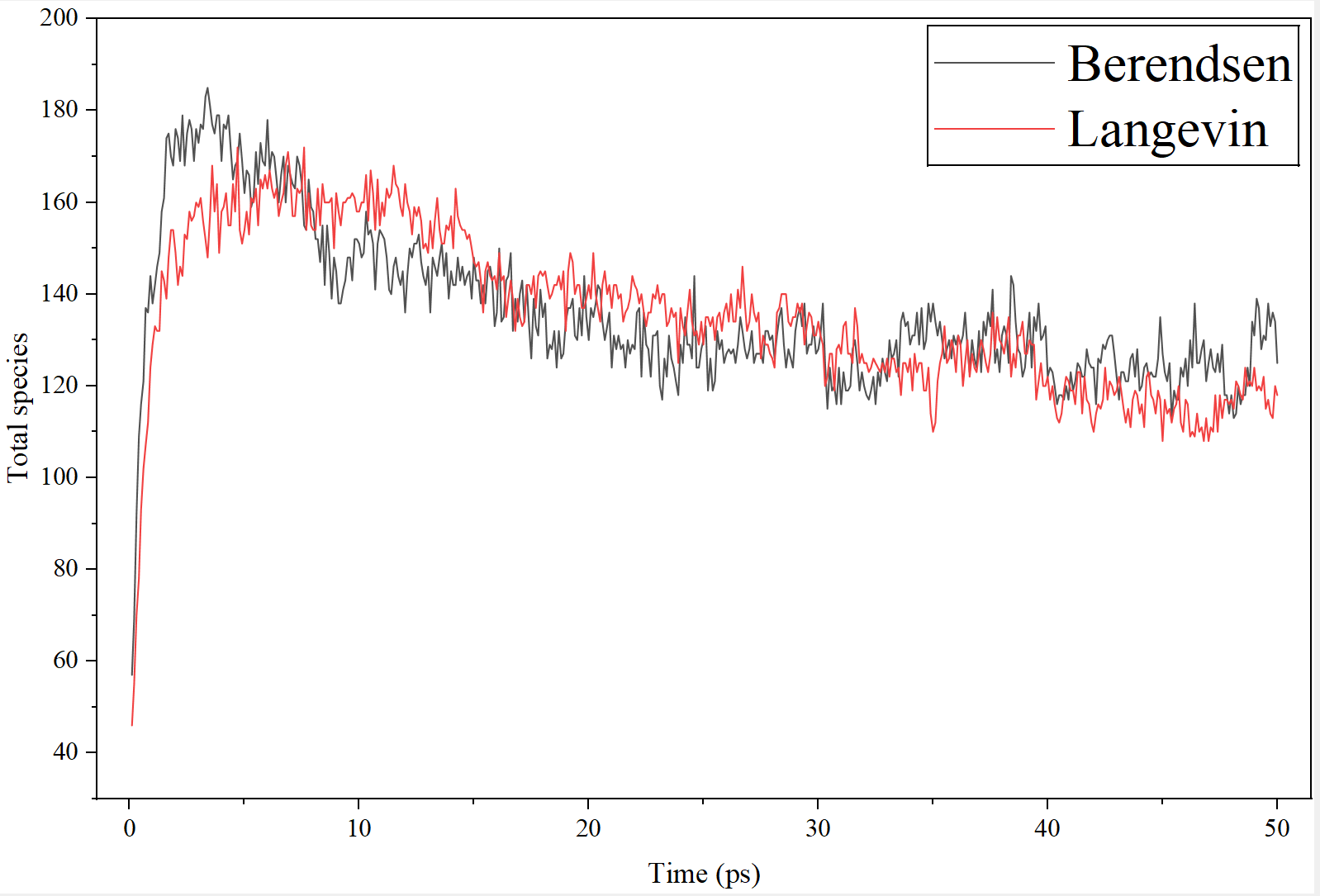
4.Impact on Reaction Initiation: I also compared the time evolution of the total number of species between the two thermostats (Fig4).

Main questions (only two)
- For ReaxFF pyrolysis at 2500 K, are brief temperature spikes (even if rare) considered acceptable, or do they indicate numerical instability that can bias products/pathways?
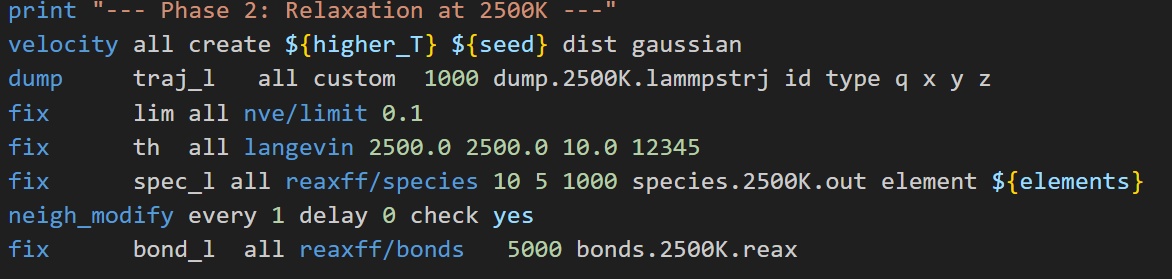
- To avoid temperature fluctuations, is fix langevin + fix nve/limit 0.05 a reasonable production approach? With ~2% of steps being limited, is it likely to bias kinetics/chemistry? If not recommended, what is the first thing should change to reduce spikes (timestep, QEq settings, neighbor rebuild, thermostat damping, etc.)?
input.in (2.1 KB)
Thank you for your time and advice.
Bowen